
The Importance of Building India’s Northeast Connectivity and Infrastructure
Brahmyaa Rajpal
Research Intern
1. INTRODUCTION
Northeast India is in the middle of its largest infrastructure push in decades. The Government of India is planning to invest INR 10 lakh crores over the next two years to improve and develop highways in India, with the northeast region of India (NER) as a stated priority. High multimodal progress has been visible, with airports rising from 9 to 17 and a plan to ensure complete rail connectivity in the NER by 2029.
However, every discussion on NER connectivity, or the lack of it lands up at the Siliguri Corridor, the ~22 KM “Chicken’s Neck” linking the region to the rest of India. This has become a significant chokepoint – arguably, the most important one. The eight northeast states viz. Arunachal Pradesh, Assam, Manipur, Meghalaya, Mizoram, Nagaland, Sikkim, and Tripura are not well connected to each other, which has to be a top priority. Every flagship project for improving NER’s connectivity and/or infrastructure to the rest of India, whether for trade or for security reasons, assumes that there is an existing network of physical infrastructure to plug into. This policy brief assesses this contrast, both in terms of internal connectivity and infrastructure to debunk this assumption and makes the case that interior connectivity should be the aim for the next phase of investments.
2. THE PRECONDITION
Major initiatives, cross-border railway lines and new investment zones, including the India-Myanmar-Thailand Trilateral Highway all assume that goods and people can move within the region once they arrive and that there is existent hinterland connectivity that can provide the necessary structure for a proposed project to work. Various investment projects assume that the region can absorb and further circulate that investment within the region. As suggest by many recent studies, this assumption does not hold uniformly highlights this. Each state in the northeast region of India plays a distinct role. Yet, even the government treats all the states and their inter-connectivity as part of one system, when the evidence says otherwise: a highway to Myanmar or a rail line to Bangladesh is only as useful as the roads feeding into it from across the region. Figure 1 showcases the current status of connectivity in the NER states.
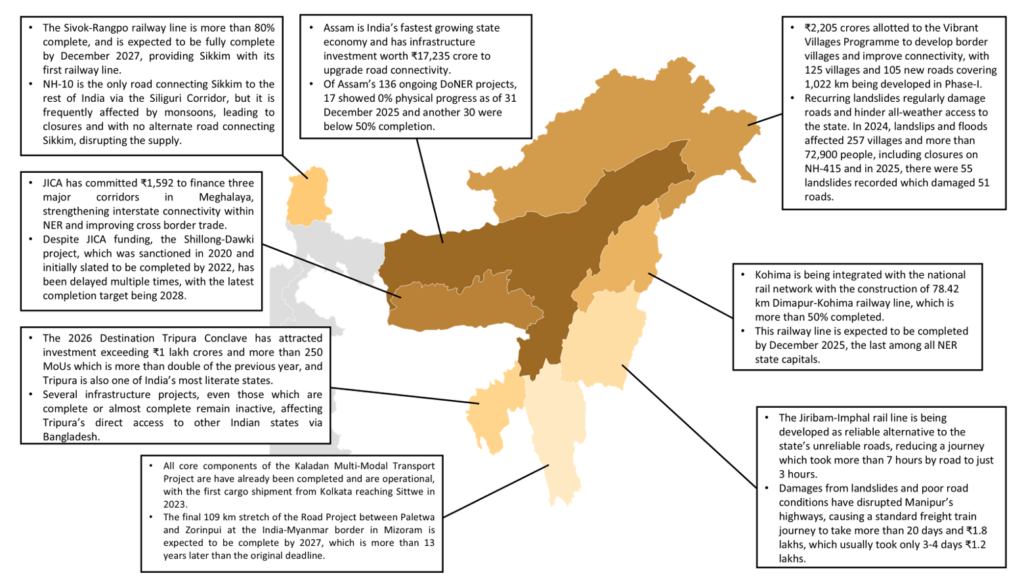
Figure 1: Author’s compilation; map source: OpenStreetMap (OSM), via Datawrapper
This has historically shown up in trade numbers. NER’s total exports only accounted to ₹30.9 billion in FY19, which is just 0.13% of India’s total exports in the same fiscal year. Out of these total exports, Assam alone accounted for 84% of the northeastern states’ total trade, followed by Meghalaya at 12% and Sikkim at 2%. Also, NER exports only 21% of their total exports through their own border gateways, which accounts for only 0.03% of India’s total exports. It must also be noted that Assam’s greater share is not a sole outcome of connectivity but also its thriving tea plantation and petroleum export base.
The cost of a strong hinterland network also shows up in the prices of goods in the NER, with the World Bank estimating a price rise of 60% in rural areas and 30% in urban areas. The gap in connectivity is widening the gap in trade. The movement of people and goods will increase only if there a well-functioning transport system in place. An improvement in border checkpoints, in cross-country connectivity and various projects that aim to improve trade, these only work if the goods and people can actually reach their destination without any hindrance.
An example is the Zokhawthar Land Custom Station (LCS) in Mizoram, which was opened in 2015, and is officially functional but remains inactive. It lacks staff and basic facilities such as quarantine and food testing. Traders also face various issues. It needs to be upgraded, by not just increasing the staff but also by improving the transport to and from the LCS.
This highlights two important points: that not only is the connectivity important within the states, it is also important from the states to border checkpoints. Thus, there is not only a need to improve border checkpoints and border areas of NER, but also to improve interstate connectivity within the NER.
3. WHY INTERIOR CONNECTIVITY IS STILL MISSING
3.1 TERRAIN
Northeast India is one of the most difficult places in world to build infrastructure. Assam and Meghalaya receive some of the world’s highest rainfall, with Mawsynram in Meghalaya receiving 11,872 mm of annual rainfall, the highest in the world. Arunachal Pradesh, Manipur, Sikkim, Nagaland and Mizoram require extensive tunnelling which increasing both costs and time to build and work on infrastructure projects. The Bairabi-Sairang railway line in Mizoram required 48 tunnels for just 51 km. Also, the entire northeast region is part of one of world’s most seismically active zones. This adds to the already difficult terrain to work with.
3.2 HISTORY
Transport infrastructure that was built during pre-Independence times was built to serve the Assam valleys’ tea extraction economy and to transport this tea outward to colonial markets, rather than building connectivity within the region of what now is Nagaland, Manipur, Mizoram and Arunachal Pradesh, leaving them without a network to build upon on. Post-independent, one part of the region had a transport network built for extraction, and rest had none, not accidently, but by design.
Terrain issues and colonial history can explain why interior connectivity was never built from the start. However, eight decades after independence and with the current investment boom, external corridors are more likely to be prioritised over building these resilient interior links.
3.3 EXECUTION
Northeast India is receiving ever-increasing investment and attention, yet there are still no proper linkages between the states. State governments themselves acknowledge the fact that there are connectivity gaps that need to be filled, not individually, but as part of a whole. Multiple delays, increasing costs, and security issues, all have contributed to this.
Furthermore, there is a play of the political economy of prioritisation in understanding why corridors and external links have historically been prioritised over interior links. Beyond simply being connectivity, many cross-border projects and corridor projects also carry strategic and diplomatic importance, which usually places it on high priority. However, a corridor that is not well connected internally will not be successfully utilised.
4. ALIGNING THE NEXT PHASE OF INVESTMENT IN THE REGION
4.1 IMPROVING UPON EXISTING GAPS FIRST
Rather than concentrating funding exclusively on new projects, investment projects should focus on closing missing links first and improving upon the gaps which already exists. An example is provided by Assam’s own government and the World Bank, which list ‘missing road links and bridges’ that are required for basic interstate movement. It says that the network is being built project by project rather than as a part of an integrated system.
4.2 EXTENDING THE VIBRANT VILLAGES PROGRAMME
The Vibrant Villages Programme Phase II (VVP II) already lists the northeast states as regions where there needs to comprehensive development of border villages. VVP already includes roadways to unconnected villages as one of the interventions, but it could also include railways to nearby regions, which would provide incentive to people to actually stay in border villages if they know there is a transport system in place allowing them to easily travel, not just to neighbouring towns but to elsewhere too.
Under VVP-II, which covers the whole NER and some other states, and has been allotted ₹6,839 crores till FY29, Assam alone covers 140 border villages across 9 districts and 26 blocks, and similar coverage is also extended to the other NER states. Comparing this with VVP-I, which had an outlay of ₹4,800 crores and covered only 655 priority villages across Arunachal Pradesh, Himachal Pradesh, Sikkim, Uttarakhand and Ladakh, VVP-II covers more states and has a bigger outlay.
4.3 DESIGNATING THE HIGH LEVEL TASK FORCE TO WORK WITH PM GATI SHAKTI
PM Gati Shakti exists to transform India’s infrastructure. It aims to develop modern connectivity infrastructure through Network Planning Groups maintained by each state and Technical Support Units. As per PM Gati Shakti, states must also maintain a State Logistics Policy and keep and maintain the latest data to be eligible for future project funding. There also exists northeast India’s own High Level Task Force to provide strategic direction and address gaps and challenges across NER.
So, instead of them working separately, there should exist a mechanism which requires the task force to enforce all this, not separately, but alongside PM Gati Shakti. At present, the task force identifies priorities and Gati Shakti works on funding. Instead, what could be done is to require every gap and priority issue flagged by the task force to pass through the same Network Planning Group, which would increase priority for funds and sanctions, ultimately closing the gaps identified by the task force.
5 CONCLUSION
The eight states in the northeast region of India are receiving ever increasing capital and investment right now. Projects are being undertaken, infrastructure is being developed and security is increasing at the borders. What remains to be seen is whether these are just to increase northeast India’s connectivity to other states of India and to other countries, or to also connect the northeastern states to each other. That’s also important, to close these interior gaps within the states, to make sure that northeast India doesn’t lag behind just because of inefficient transport and physical infrastructure.
The next phase of investment needs to ensure that this is not case. It needs to be judged not by how well the Siliguri Corridor is being developed or how much trade is being conducted by the NER with other countries or how many tourists are using the Trilateral Highway, although all these deserve attention too. Rather, it needs to be judged on whether these tourists can actually move from one state to the next without their travel time and costs increasing, on whether the trade that happens in the NER is actually able to reach its destination on time and without damage, on whether the goods and people can even reach the Siliguri Corridor in the first place.