
The Provincial Globalists: How States are Rewriting Trade Diplomacy
Krishangi Kathotia
Research Assistant
1. INTRODUCTION
Apple’s export of iPhones from India crossed USD 23 billion in 2025, with an 85 percent jump from the previous year. India’s Foreign Direct Investments (FDI) crossed the threshold of USD 1.4 trillion between April 2000 and December 2025. These stories did not emerge simply in New Delhi and what had actually unfolded was the radical decentralisation of trade diplomacy in India. It is the state capitals – Gandhinagar, Chennai, Bengaluru, Kolkata and Mumbai among others that are negotiating, incentivising and closing deals with their global counterparts. Many Indian states are assembling dedicated semiconductor missions, organising domestic investment summits with 100+ participants and participating in the ones abroad in London and Berlin. These states are now provincial globalists with their own strategic outlook to engage with the world.
These interactions are best understood through the lens of para-diplomacy. It refers to the international engagement of subnational governments to advance their economic, political or cultural interests while operating within the constitutional framework of the national government. Unlike foreign policy, which remains the exclusive domain of the Central government in India, para-diplomacy focuses on areas such as trade promotion, investment attraction and economic cooperation. In India, it has emerged as a significant feature of competitive federalism, with states increasingly acting as economic diplomats in pursuit of development, especially as the global supply chain shift towards China+1 options is accelerating.
1.1 THE CHINA+1 WAVE
COVID-19 and the recent trade tensions due to the U.S. tariffs and the Hormuz blockade exposed the fragility of the global supply chain system and the dependence on a single manufacturing hub. This led to multinationals building supply chains elsewhere to secure their global supplies. India became an obvious candidate due to its market and governance structures. This is reflected in the FDIs that India has been able to procure recently. Figure 1 shows that in 2024-25, the FDI equity inflow touched USD 50 billion with a 13 percent rise over the previous year. The total FDI inflow also touched USD 80.6 billion. It also reflects that manufacturing FDIs are a rising sector but non-manufacturing sectors still dominate the equity inflows in India, owing to the expanding service sector.
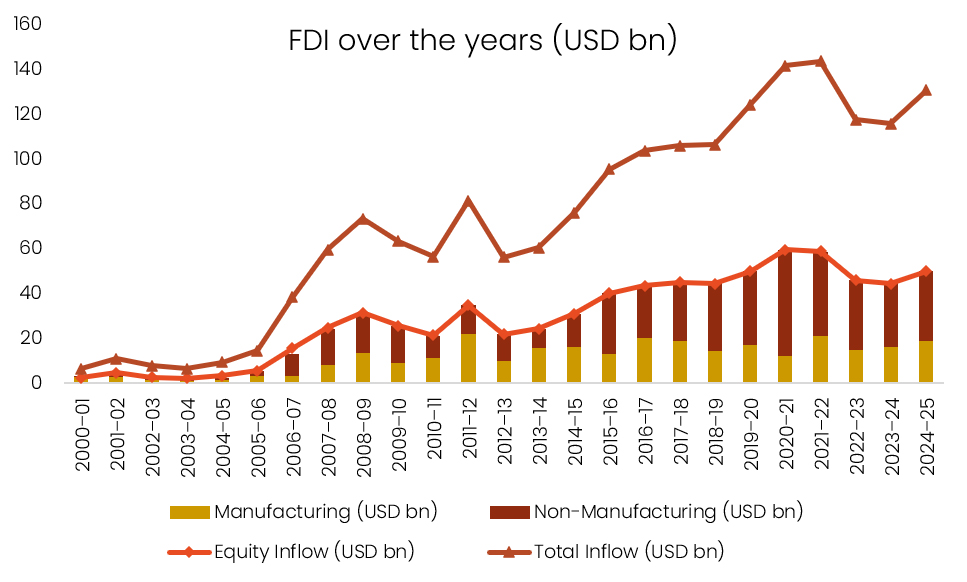
Figure 1, author’s computation from DPIIT data
However, the story that the bigger picture does not narrate is that this. India is not one investment destination, but 28 states and 8 union territories, each running their own pitch, narrative and strategy.
1.2 STATES HAVE BEEN RUNNING THEIR OWN FOREIGN POLICY FOR TWENTY YEARS
The FDI inflows did not begin with China+1 strategies. It started in the 1990s itself, after India opened its doors to the world through liberalisation policies. The pioneers have been Gujarat, Maharashtra, Tamil Nadu and Karnataka. Gujarat began the “Vibrant Gujarat Global Summit,” launched by then Chief Minister Narendra Modi. This brand building and foreign engagement became the template for everyone.
Other states also followed, with Tamil Nadu leveraging its port infrastructure and industrial base to build relations and receive investments from European and Asian partner countries. Maharashtra has remained India’s FDI champion, drawing more than USD 19 billion in equity 2024-25, which is about 39.1 percent of the national total. The state continues to leverage its financial infrastructure and highly sophisticated workforce to create a favourable business environment for investments. Karnataka followed at 13.2 percent of the national total due to its positioning as the Silicon Valley of the East. These trends demonstrate that while this competitive federalism has brought out significant investment outcomes, there might be a disproportionate concentration of investments in a small group of states and balancing that becomes a policy priority.
Earlier this year, even Telangana followed by securing investments at Davos worth almost USD 3.6 billion, focusing on hardware development, clean energy and green manufacturing, including Small Modular Nuclear Reactor – all resulting in employment generation as well. Before 2014, Telangana did not exist as a separate state and did not have its own FDI track record, and yet, it has been a breakthrough state in terms of attracting FDIs across technology, pharma and life sciences, electronics, global capability centres among other industries. With a growing service sector industry, Telangana has carved its position as a top 10 state (see figure 2) in FDIs over the past few years, closely tailing giants such as Maharashtra, Karnataka and Gujarat. Telangana’s cumulative FDIs form October 2019 to June 2025 have been valued at USD 11.2 billion.
Uttar Pradesh, which is now also in the top 10 (see figure 2) has also emerged as a promising destination for FDIs. investment. Between 2000 and 2017, the state attracted only around USD 460 million in FDI. In contrast, it received approximately USD 1.33 billion in foreign investment between 2019 and June 2023 alone, nearly three times the inflows recorded over the preceding 17 years. Most recently, the numbers touched USD 660 million just between April-September 2025. This noticeable rise is due to sector-specific industrial policies and incentives, especially with a push for the manufacturing sector. It has also been complemented by rapid expansion of infrastructure in the state, including key expressways and the launch of Jewar and Hindon Airports.
1.3 THE CONCENTRATION PROBLEM
Looking at the FDI inflows for 2024-25 and 2025-26 (Until dec’25), it is evident that Maharashtra and Karnataka have absorbed more than half of the national total FDI equity inflows, at 52-55 percent. If we add the totals of Gujarat, Delhi, Tamil Nadu and Telangana to this, it covers almost the entire total of equity flows. The remaining states, sometimes bigger in area and population, have received comparatively much lesser in investments. It is important to look at why some states are clear winners in the bid for FDIs and why some states are lagging behind.

Figure 2: High-FDI states, DPIIT and India Briefing
Figure 3: FDI distribution, DPIIT Data
The map in figure 3, complemented by figure 2 shows a highly uneven distribution of FDIs across Indian states, with Maharashtra receiving the highest inflow closely followed by Gujarat and Karnataka, mainly towards India Southeastern belt. Other states have received comparatively smaller levels of Foreign Investments. This also indicated that there is a pattern of Investments being channelled towards states that are already industrially developed and economically advanced, with well-established business ecosystems, rather than states that might have to build upon this from scratch.
1.3.1 Karnataka: converting a talent ecosystem to investments
Karnataka was one of the few states that were credited for the iPhone exports worth USD 23 billion in 2025. It has been the top destination for FDIs, being at the receiving end of 21 percent of the national total FDIs between October 2019 and June 2025 at almost USD 65 billion. The government of Karnataka provides the investors with a flexible choice between a capital subsidy and the Production Linked Incentive Scheme (PLI), but that is not the only reason why Karnataka took off. It is because of an ecosystem of advantage build over decades.
Bengaluru currently hosts 40 percent of India’s Global Capability Centers (GCCs), with a plan to double this number by 2029. The city also has 400 out of the total of Fortune 500 companies and contributes 39 percent to India’s total IT exports. Investment promotion is also now directed towards North Karnataka to ensure overall state development beyond the capita. Karnataka has treated its talent ecosystem as a product itself, and has built a policy architecture to leverage that globally. Services, Software and Hardware, Automobiles and the Education Sectors in Karnataka attract the highest FDIs from American, Southeast Asian and European giants.
1.3.2 Gujarat: leading with EoDB frameworks
Gujarat’s advantages are not its subsidies or low-cost land availability; it is the frictionless execution. The state became the first one to launch its own semiconductor policies in 2022, even before the national mission shaped into what we see today. The state’s framework to secure mega investment projects like the Micron ATMP facility worth USD2.75 billion has been based on few core principles. It provides dual port access through Kandla and Mundra, along with a single-window clearance process with the Micron plant inaugurated within 90 days of signing the deal. The plant was also planned to receive 70 percent of the total cost as subsidy. Three major semiconductor projects have since followed, totalling roughly USD 15 billion in announced investment by the government.
Gujarat has been India’s flagship lesson in effective industrial policy, with the clearance and implementation window being even faster than the national average, without any possible bureaucratic delays. In Gujarat’s case, the product is the speed of approval which has been able to give it a competitive advantage.
1.3.3 Madhya Pradesh: A policy on paper, an ecosystem still catching up
Madhya Pradesh is not simply a case of low-FDI numbers. It displays how a policy on paper might exist without the appropriate execution capacity, and negate the entire prospects of what the FDI policies might offer. Madhya Pradesh is often clubbed with Jharkhand, Bihar and other states on the other end of the FDI matrix, receiving little to no interest due to limited industrialisation, weaker infrastructure and relatively more constrained market access as compared to the leading states.
The state government has not been passive with its Industrial Promotion Policy (2025) and its biennial global investor summits that provide with capital subsidies, support with freight and logistics, research and development reimbursements and sector-specific schemes. On paper, it does provide with a regulatory framework to procure FDIs, but the reputation required to operationalise this – through successful experiences – has been missing. There is no flagship investment project, no nodal city advertised as the hub, no specific pre-established industry, all adding to the lack of a tested framework for an investor to ensure the credibility of investing into the state. This gap matters because a state lacking a proven track record has to work harder to receive each subsequent deal even with a strong policy in place.
1.4 LESSONS TO BE LEARNT
It is not just resources or geography that dictate the inflow of FDIs into historically low-FDI states like Madhya Pradesh. The scope of execution as well as credibility can transform the way these states interact with the world. Karnataka and Gujarat’s cases provide a framework for other states to operate in. Here are six lessons that rising and low-FDI states can adapt from the successful ones:
State | What It Did Differently | How Aspiring States Can Adapt It |
Gujarat | Made regulatory speed itself the pitch with single-window clearance, dual-port access via Kandla and Mundra, and a semiconductor policy launched years ahead of the national mission. Also developed dedicated freight corridors (DFCs) to ensure seamless logistics. | Have mandated clearance timelines, create a single-window authority with the power to sign off across departments; build a flagship project to set a credible track record. Focus on reducing the cost of logistics through infrastructural and policy development. |
Karnataka | Spent years on perfecting one core product – talent. Decades of IT and education investment layered with a flexible capital-subsidy-or-PLI choice and a push to decentralise beyond Bengaluru. | States can start smaller: anchor one sector’s skilling pipeline through technical institutes and university-industry partnerships, and decentralise beyond the primary city early rather than after congestion forces the issue. |
Uttar Pradesh | Pairing sector-specific industrial incentives with rapid infrastructure growth and development expressways, airports and manufacturing facilities, reversing years of underperformance. Logistics sector has industry status, thus reducing overall duties and associated costs. | Instead of broader schemes, focus on narrowing down industry or sector-specific needs and build incentivisation schemes accordingly. Also, start focusing on infrastructural development as early as possible, before it becomes a requirement from the investor’s side. Focus on reducing the cost of logistics through a structured policy. |
Tamil Nadu | Leveraged four ports and dense industrial corridors to establish auto, electronics, and leather manufacturing FDI, with single-window clearance on the land acquisition process with a land bank of 40,000 acres. The state also provides a reimbursement on the movement of capital goods. | Pre-develop usable lands as industrial zones so that investors can begin construction and usage immediately rather than having to wait for land acquisition after investments. Reduce the cost of logistics through subsidies to ensure trade growth and export promotions. |
Maharashtra | Combined pre-existing financial infrastructure with a highly skilled workforce to sustain its position as India’s top overall FDI destination. | Invest in higher education and vocational alignment with target sectors so “skilled labour availability” becomes part of the state’s brand before the pitch is made. |
Telangana | Entered the FDI race late, only after 2014 statehood, but built a track record fast by targeting forward-looking sectors such as hardware, clean energy, Small Modular Nuclear Reactors, and directly engaging with the world at platforms like World Economic Forum in Davos. | Focus on a few sectors and specifically develop those, even with no past history of working on them. Additionally, focus on global outreach and a robust investment promotion department so that every investment becomes a credibility proof for acquiring the next one. |
1.5 CONCLUSION
Supply chain diversification is not a permanent feature of global politics and the global economy. We are at the cusp of defining times in terms of what might become permanent for India’s manufacturing geography and establish its position as a global manufacturing hub.
National policy alone cannot decide how much of this opportunity can India actually capture, and keep for the long term. This comes down to the quality of subnational diplomacy – whether state governments can promote the state as a favourable destination, find the right investors, make deliverable commitments and actually building what is required to deliver those commitments. Some states who have actually fulfilled most of these – such as Karnataka, Maharashtra and Gujarat, are going to be the anchors of India’s next phase of industrialisation. The others, must catch up on the lost time to actualise this supply chain diversification opportunity, and receive strategic support from the central government to provide a level playing field. A state like Madhya Pradesh or Jharkhand can replicate single-clearance models or investment promotion schemes but it cannot replicate Gujarat’s dual-port access or Karnataka’s decades of talent building and accumulation. Here, the center can intervene to ensure the right capacity building to prevent competitive federalism from turning into interstate competition.
India’s foreign economic policy, in this sense, is never crafted in boardrooms of New Delhi. It is deliberated in the CM’s offices in Chennai, Hyderabad, Bengaluru and Gandhinagar, at their investor summits and is reflected in the MoUs that they are able to negotiate and sign, and convert into investments that change the game.